


Cart
0
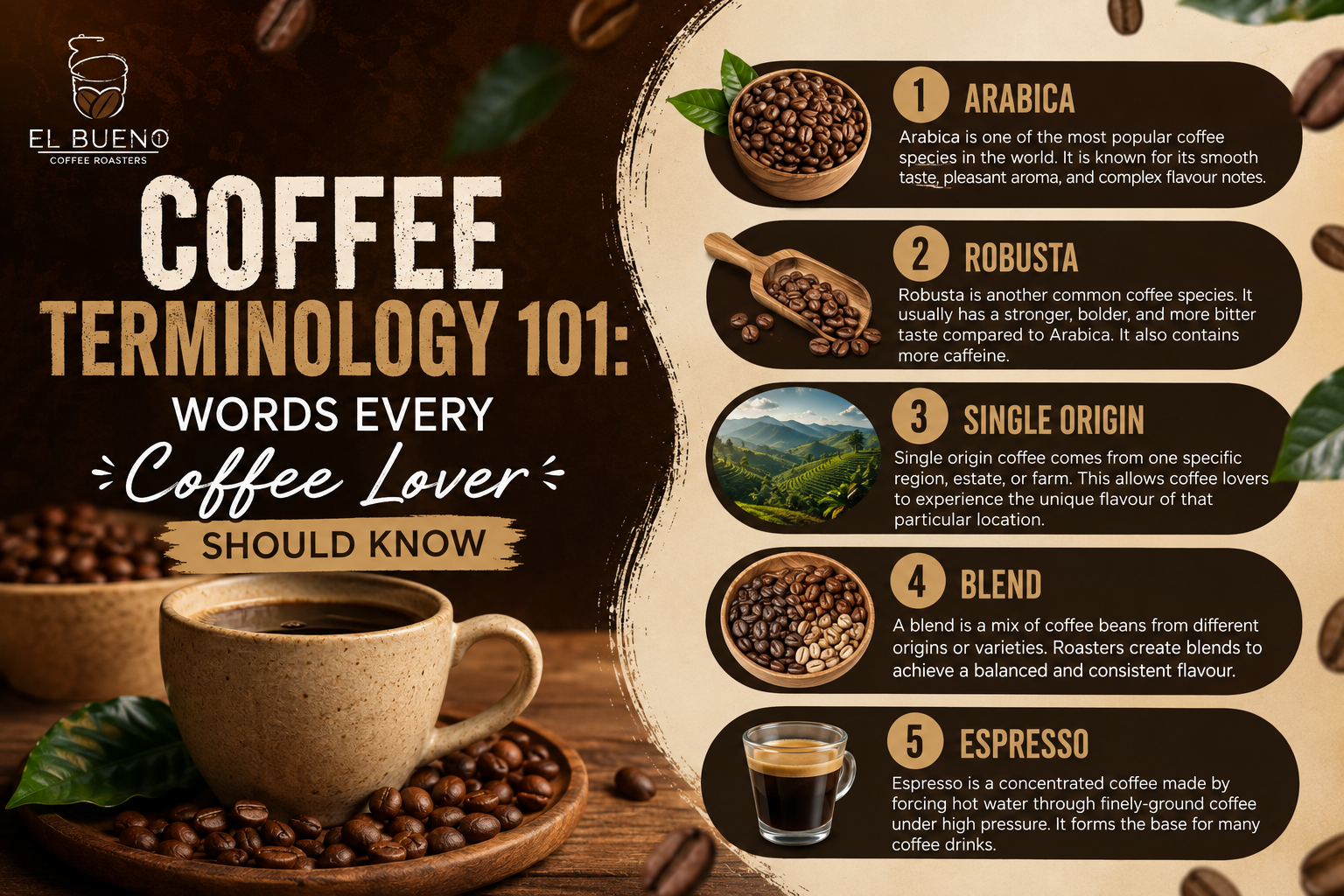
Coffee has its own language, and once you know it, ordering, brewing, and buying beans gets a lot easier. Below, we answer the questions people actually ask about coffee terminology, one straight answer at a time. We're El Bueno Coffee Roasters, a specialty roastery based in Delhi sourcing single-estate beans from across India, this is the vocabulary we use every day, explained simply.
For coffee lovers, learning coffee terminology makes the experience more enjoyable. It helps you choose the right beans, understand flavour profiles, and appreciate the effort that goes into every brew. Brands like El Bueno Coffee Roasters focus on bringing out the natural character of Indian coffee beans through careful sourcing, small-batch roasting, and thoughtful brewing solutions.
1. What is Arabica Coffee?
Arabica is one of the most popular coffee species in the world. It is known for its smooth taste, pleasant aroma, and complex flavour notes. Many specialty coffees are made using Arabica beans because they often have better sweetness, acidity, and overall balance.
2. What is Robusta Coffee?
Robusta is another common coffee species. It usually has a stronger, bolder, and more bitter taste compared to Arabica. It also contains more caffeine. Robusta is often used in espresso blends because it helps create a thick crema and strong body.
3. What is the difference between Arabica and Robusta Coffee?
Arabica is smoother, more aromatic, and higher in acidity; Robusta is stronger, more bitter, and higher in caffeine. Arabica dominates specialty coffee for its flavour complexity, while Robusta is prized in espresso blends for body and crema. Most Indian specialty roasters, including us, work primarily with Arabica.
3. What is Single Origin Coffee?
Single origin coffee comes from one specific region, estate, or farm. This allows coffee lovers to experience the unique flavour of that particular location. For example, coffee from Karnataka may taste different from coffee grown in other parts of India because of differences in soil, climate, altitude, and processing.
4. What is a Coffee Blend?
A blend is a mix of coffee beans from different origins or varieties. Roasters create blends to achieve a balanced and consistent flavour. A good blend may combine sweetness, body, acidity, and aroma in a way that works well for daily brewing.
5. What is Roast Level in Coffee?
Roast level refers to how long coffee beans are roasted. The most common roast levels are light, medium, and dark. Light roasts usually highlight fruity and floral notes, medium roasts offer balance, and dark roasts bring out bold, smoky, and chocolate-like flavours.
6. What is Acidity in Coffee?
In coffee, acidity does not mean sourness. It refers to the bright, lively, and refreshing quality of coffee. Coffees with good acidity may remind you of citrus fruits, berries, or green apple. It adds freshness and complexity to the cup.
7. What is Body in Coffee?
Body describes how coffee feels in your mouth. A coffee can feel light, medium, or heavy. For example, a light-bodied coffee feels delicate and tea-like, while a full-bodied coffee feels rich, creamy, and heavier on the palate.
8. What is Coffee Aroma?
Aroma is the fragrance of coffee. It is one of the first things you notice when you open a bag of freshly roasted beans or brew a cup. Coffee aromas can be floral, nutty, fruity, chocolatey, spicy, or caramel-like.
9. What are Flavour Notes in Coffee?
Flavour notes describe the natural tastes found in coffee. These are not added flavours. They come from the bean, origin, processing method, and roast style. Common flavour notes include chocolate, caramel, berries, nuts, honey, citrus, and spices.
10. What is Coffee Crema?
Crema is the golden-brown layer that forms on top of a freshly pulled espresso shot. It is a sign of proper extraction and fresh coffee. Crema adds texture, aroma, and richness to espresso.
11. What is Espresso?
Espresso is a concentrated coffee made by forcing hot water through finely ground coffee under pressure. It is strong, rich, and forms the base for drinks like cappuccino, latte, americano, and mocha.
12. What is Americano?
An Americano is made by adding hot water to espresso. It has the strength of espresso but a lighter taste and texture, similar to black coffee.
13. What is Latte?
A latte is made with espresso and steamed milk. It has a creamy texture and a mild coffee flavour, making it a popular choice for people who enjoy smooth milk-based coffee.
14. What is Cappuccino?
A cappuccino is made with espresso, steamed milk, and milk foam. It usually has a stronger coffee taste than a latte because it contains less milk and more foam.
15. What is Cold Brew?
Cold brew is coffee brewed with cold water over several hours. It is smooth, naturally sweet, and less acidic than hot-brewed coffee. It is a great option for people who enjoy refreshing coffee without bitterness.
16. What is Pour Over?
Pour over is a manual brewing method where hot water is poured over coffee grounds in a filter. It gives the brewer more control over flavour, strength, and clarity. This method is loved by people who enjoy clean and delicate coffee.
17. What is French Press?
French press is a brewing method where coffee grounds are steeped in hot water and then separated using a metal plunger. It produces a rich, full-bodied cup because the coffee oils remain in the brew.
18. What is Grind Size?
Grind size refers to how fine or coarse the coffee grounds are. Different brewing methods need different grind sizes. Espresso needs a fine grind, pour over needs a medium grind, and French press needs a coarse grind.
19. What is Extraction?
Extraction is the process of pulling flavour from coffee grounds using water. If coffee is under-extracted, it may taste sour or weak. If it is over-extracted, it may taste bitter. A balanced extraction creates a smooth and enjoyable cup.
20. What is Freshly Roasted Coffee?
Freshly roasted coffee means the beans have been roasted recently and still carry their natural aroma and flavour. Small-batch roasting, like the approach followed by El Bueno Coffee Roasters, helps maintain freshness and allows each bean’s unique character to shine.
Why Coffee Terminology Matters
Understanding coffee terms helps you make better choices. You can select beans based on roast level, origin, flavour notes, or brewing method. It also helps you communicate better with baristas, roasters, and café teams.
For home brewers, coffee terminology can improve the brewing experience. You will know why grind size matters, how extraction affects taste, and how different methods create different flavours. For café owners, these terms help in menu planning, staff training, and customer education.
Frequently Asked Questions
Is Arabica or Robusta better for specialty coffee?
Arabica is generally preferred for specialty coffee because of its smoother taste and more complex flavour notes. Robusta is valued mainly for body and crema in espresso blends, and for its lower cost and higher caffeine content.
Why does single-estate Indian coffee taste different from region to region?
Altitude, soil, climate, and processing method all shape flavour, so coffee from Chikmagalur, Coorg, and the Nilgiris each carries a distinct character even though all three regions grow Arabica. This is the core idea behind single-origin coffee.
What's the difference between a blend and a single origin?
A single origin comes from one estate or region and showcases that location's unique flavour. A blend combines beans from multiple sources to create a consistent, balanced everyday cup. Neither is "better" they serve different purposes.
Does grind size really change how coffee tastes?
Yes. Grind size has to match your brew method fine for espresso, medium for pour over, coarse for French press. A mismatched grind size is one of the most common causes of sour, weak, or bitter coffee at home.
El Bueno Coffee Roasters: Helping You Brew Better
El Bueno Coffee Roasters celebrates the beauty of Indian coffee by sourcing quality beans from dedicated farmers and roasting them in small batches. Their focus is not just on selling coffee but on helping people experience coffee better.
From artisanal coffee and brewing equipment to coffee machines, menu curation, and beverage development, El Bueno Coffee Roasters supports both home brewers and café owners. Their philosophy is simple: brew, sip, and savour #OnlyTheGood
Final Thoughts
Coffee terminology may seem confusing at first, but once you understand the basics, your coffee journey becomes much more exciting. Words like acidity, body, crema, extraction, roast level, and single origin help you understand what makes each cup special.
Whether you enjoy a strong espresso, a smooth cold brew, or a carefully brewed pour over, knowing these coffee terms will help you appreciate every sip even more.


