


Cart
0
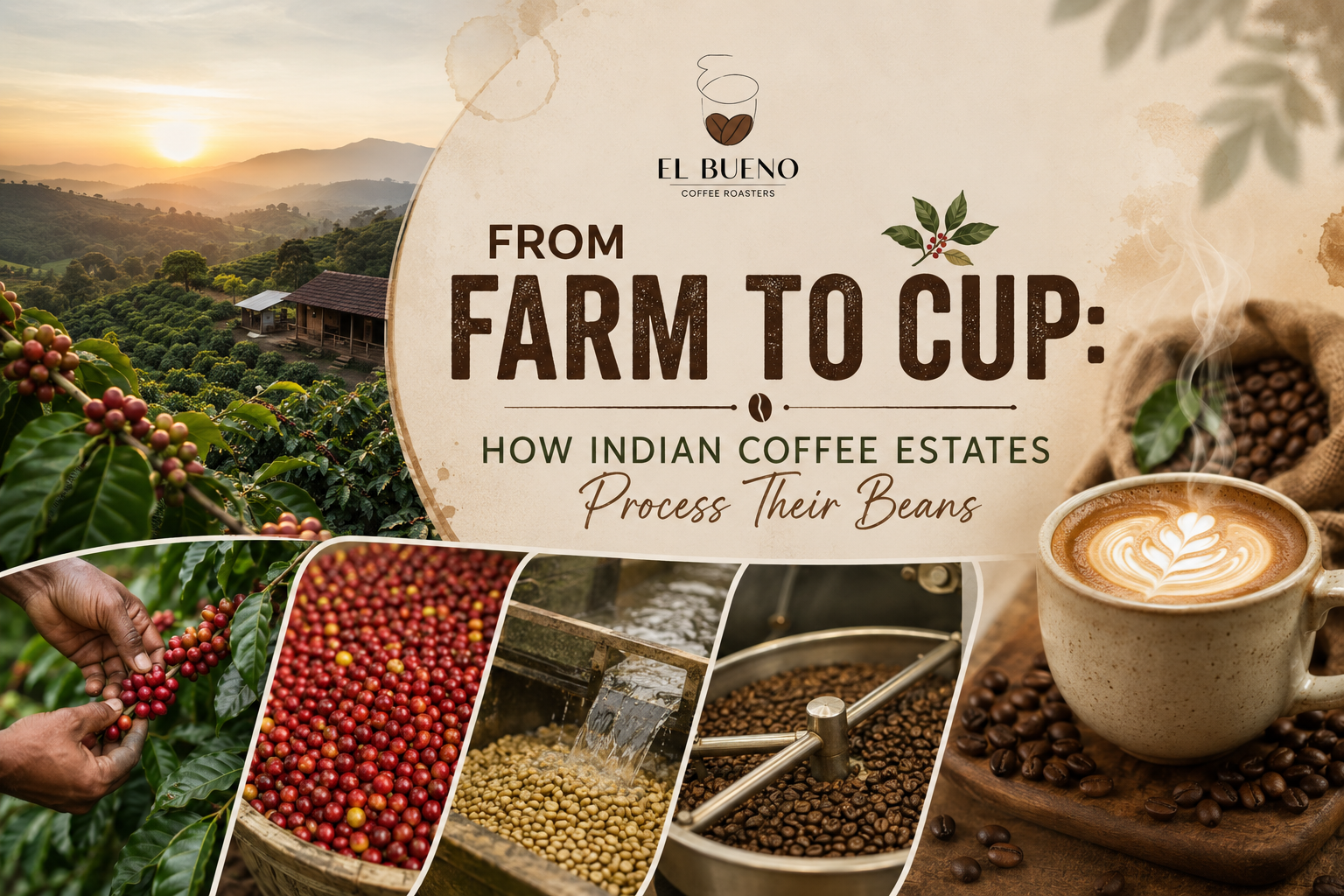
Every cup of coffee starts long before roasting, at the estate, where farmers grow, harvest, and process cherries to bring out their natural flavour. Below, we walk through each stage of that journey, from handpicking to hulling, and explain how washed, natural, and honey processing each shape the final cup differently. We're El Bueno Coffee Roasters, and this is the same process behind the single-estate beans we source and roast in Delhi.
What makes Indian coffee estates distinct?
Coffee in India is mostly grown under shade, alongside spices, fruit trees, and natural biodiversity, across regions like Karnataka, Kerala, and Tamil Nadu. This growing environment gives Indian coffee its characteristic smooth body, balanced acidity, nutty sweetness, chocolate notes, and gentle spice-like complexity.
How are coffee cherries harvested?
Most Indian estates use selective handpicking, where only ripe red cherries are picked and unripe ones are left to mature on the plant. This takes more effort than machine harvesting, but ripe cherries carry the right sweetness and flavour potential that later develops through processing and roasting.
Why are coffee cherries sorted after harvest?
Cherries are sorted to remove damaged, overripe, underripe, or defective fruit, since even a small number of poor cherries can affect an entire batch's taste. Some estates sort manually; others use water flotation, where lighter, defective cherries float to the surface and denser, healthier ones are kept.
What is washed process coffee?
In the washed process, the fruit layer is removed from the cherry before the beans are fermented, cleaned, and dried. This produces coffee that tastes clean, bright, and balanced, highlighting the bean's natural clarity a good fit if you prefer smooth, refined flavours over fruit-forward sweetness.
What is natural process coffee?
In the natural process, whole cherries are dried with the fruit still around the bean, so fruit sugars influence the bean as it dries. This creates sweeter, fruitier coffee with notes of berries, dried fruit, chocolate, or wine-like sweetness but it requires careful, regular turning to avoid uneven fermentation.
What is honey process coffee?
The honey process sits between washed and natural: the outer skin is removed, but some sticky fruit mucilage is left on the bean during drying. This produces coffee that's sweet and smooth, with more body than washed coffee and more clarity than natural coffee.
Washed vs Natural vs Honey: How Do They Compare?
|
Process |
What Happens |
Typical Flavour |
|
Washed |
Fruit removed before fermenting and drying |
Clean, bright, balanced |
|
Natural |
Whole cherry dried with fruit intact |
Sweet, fruity, wine-like |
|
Honey |
Skin removed, some mucilage left on during drying |
Sweet, smooth, richer body than washed |
How are coffee beans dried after processing?
Beans are spread on raised beds, patios, or drying yards and turned regularly to dry evenly and prevent mould or over-fermentation. The goal is reducing moisture to a safe storage level — poor drying at this stage affects flavour, shelf life, and how the beans perform later during roasting.
What happens during hulling and grading?
Once dry, beans are hulled to remove the parchment or dried fruit layer, then graded by size, density, and quality, with defective beans removed. This stage is what gives specialty roasters consistent lots to work with, rather than a mixed bag of varying quality.
How does roasting affect processed beans?
Processing sets the foundation, but roasting brings out each bean's character — a roaster studies the bean and chooses a roast profile to highlight what processing already built in. We roast in small batches in Delhi to bring out the best of each single-estate lot we source, rather than roasting for a uniform house style.
How does brewing affect the final cup?
After roasting, the final taste still depends on grind size, water temperature, brew method, and freshness. Well-processed Indian beans can deliver a rich, satisfying cup whether brewed as espresso, pour over, French press, cold brew, or South Indian filter coffee.
Frequently Asked Questions
What's the main difference between washed and natural coffee? Washed coffee has the fruit removed before drying, giving a clean, bright cup. Natural coffee is dried with the fruit still on, giving a sweeter, fruitier cup. The processing method affects flavour as much as origin or roast level does.
Is honey-processed coffee sweeter than washed coffee? Yes, generally. Honey processing leaves some fruit mucilage on the bean during drying, giving it more sweetness and body than washed coffee, while staying cleaner and more balanced than natural coffee.
Why do Indian coffee estates handpick cherries instead of machine harvesting? Handpicking allows farmers to select only ripe red cherries and leave unripe ones to mature, which produces better sweetness and flavour potential. It takes more labour than machine harvesting but results in more consistent cup quality.
Does coffee processing matter more than origin? Both matter, but for different reasons. Origin (soil, altitude, climate) sets the bean's baseline character; processing method shapes how that character expresses itself the same estate's cherries can taste noticeably different depending on whether they're washed, natural, or honey-processed.
Where does El Bueno source its coffee beans from? We source single-estate beans from coffee-growing regions across India, including Karnataka, and roast them in small batches in Delhi, for home brewers and café partners across Delhi NCR.
Final Thoughts
The journey from farm to cup is filled with care, skill, and patience. Indian coffee estates play a major role in shaping the flavour of every bean through thoughtful harvesting, sorting, processing, drying, and grading.
Brands like El Bueno Coffee Roasters help bring this journey closer to coffee lovers by sourcing quality Indian beans and roasting them with attention and craft. So, the next time you sip your coffee, remember that every cup carries the story of the farm, the farmer, the process, the roaster, and the passion behind it.


