


Cart
0
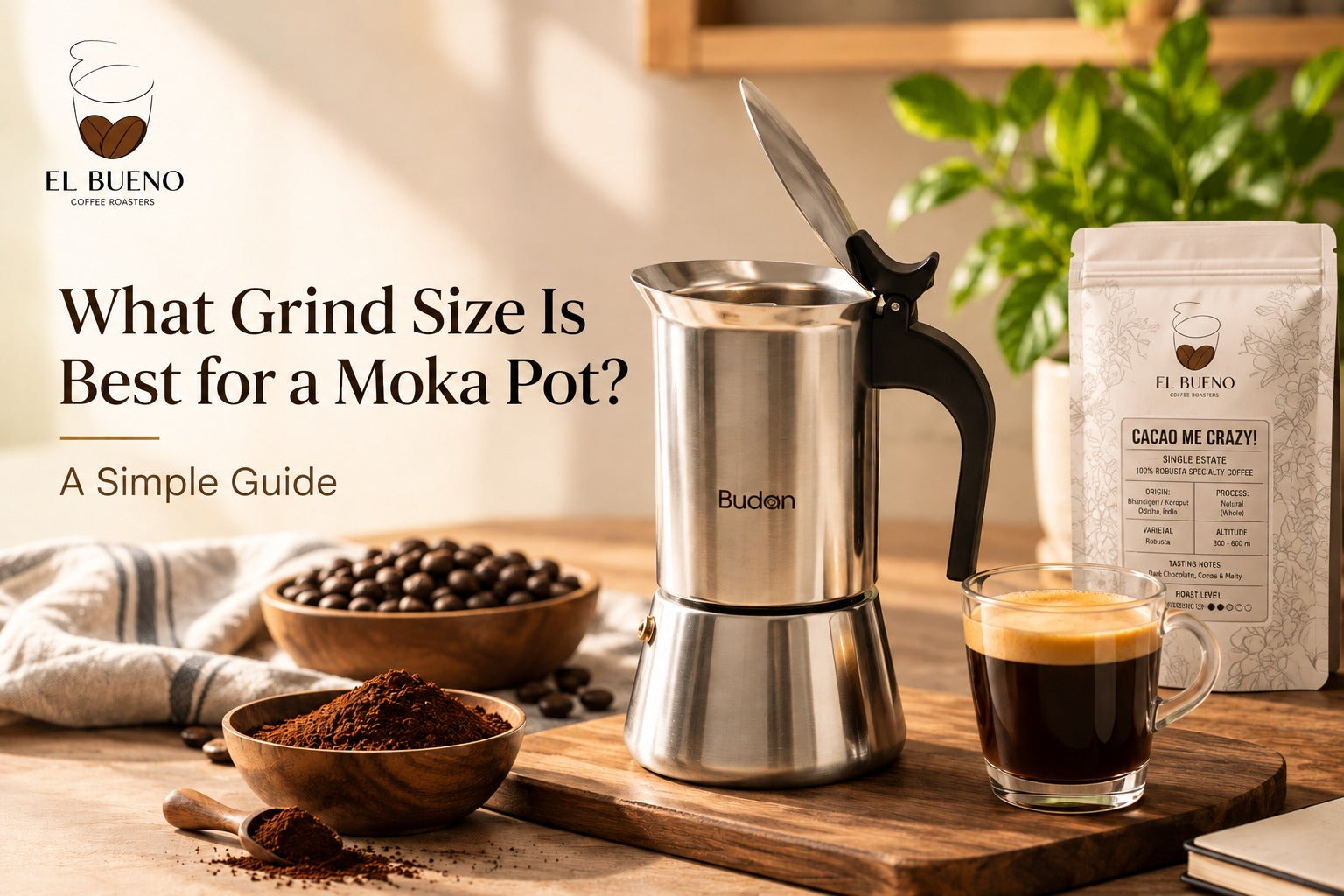
A good moka pot brew depends on more than just the coffee beans you choose. Grind size plays a major role in how water moves through the coffee and how much flavor is extracted. If the grind is too fine or too coarse, your coffee may taste bitter, weak, or unbalanced.
Understanding the right moka pot grind size can help you prepare a richer and smoother cup at home. Whether you are using a traditional stovetop brewer or a stainless steel model such as the Budan Stainless Steel Moka Pot, getting the grind right is an important starting point.
What Grind Size Is Best for a Moka Pot?
A medium-fine grind is generally a good starting point for moka pot brewing. It should be finer than the grind used for a French press but slightly coarser than a typical espresso grind.
The goal is to create enough resistance for the water to extract flavor properly without making it difficult for the water to pass through the coffee bed.
The ideal grind can vary slightly depending on the coffee, grinder, moka pot, heat level, and personal taste. Start with a medium-fine setting and adjust gradually based on the flavor of your brew.
Why Does Grind Size Matter?
Grind size determines how quickly water extracts compounds from coffee.
A finer grind has more surface area exposed to water, which generally allows faster extraction. A coarser grind slows extraction because less surface area is exposed.
With a moka pot, the wrong setting can affect both extraction and flow. A grind that is too fine may create excessive resistance and contribute to over-extraction. A grind that is too coarse may allow water to pass through too quickly, producing a weaker and less developed cup.
What Happens If the Grind Is Too Fine?
If your coffee tastes harsh, excessively bitter, or overly intense, the grind may be too fine.
A very fine grind can also make the brewing process more difficult because the compact coffee bed creates greater resistance. Instead of immediately changing several brewing variables, try moving one or two steps coarser on your grinder and compare the result.
Small adjustments can make a noticeable difference.
What Happens If the Grind Is Too Coarse?
A grind that is too coarse can result in under-extraction. The coffee may taste thin, flat, sour, or lacking in sweetness.
If your moka pot coffee seems weak despite using fresh beans and an appropriate coffee-to-water ratio, try making the grind slightly finer.
The goal is a balanced extraction where the coffee has enough body and flavor without excessive bitterness.
How Does Coffee Choice Affect Moka Pot Brewing?
Grind size is important, but the coffee itself also influences the final cup. Freshly roasted beans with a suitable roast profile can provide better aroma, sweetness, and body.
For moka pot brewing, medium to medium-dark roasted coffees are often popular because they can produce a fuller and richer cup. However, lighter roasts can also work if you prefer brighter acidity and more delicate flavors.
At El Bueno Coffee Roasters, exploring different origins and roast profiles can help you discover which coffee works best with your moka pot.
How Should You Use a Moka Pot?
Once you have selected the right moka pot grind size, your brewing technique also matters.
Start by filling the lower chamber with water according to your brewer's recommended level. Add freshly ground coffee to the filter basket and distribute it evenly without aggressively tamping it down.
As the moka pot heats, water moves upward through the coffee bed and collects in the upper chamber. Use moderate heat and remove the brewer from the stove when the brewing process is nearly complete.
A stainless steel brewer such as the Budan Stainless Steel Moka Pot can be a practical choice for home brewing because its design is suitable for different stovetop setups, including induction, gas, and electric cooking surfaces.
How Can You Improve Your Moka Pot Coffee?
If your first brew does not taste right, change one variable at a time.
Try adjusting:
-
Grind size
-
Coffee-to-water ratio
-
Heat level
-
Coffee freshness
-
Brewing time
-
Roast level
Avoid pressing or tamping the coffee firmly into the basket. Moka pot brewing relies on pressure created by heated water, and excessive resistance can negatively affect extraction.
Why Freshly Roasted Coffee Matters
Freshness can significantly influence aroma and flavor. Coffee gradually loses some of its aromatic qualities when exposed to oxygen, heat, moisture, and light.
For a better moka pot experience, use freshly roasted whole beans and grind them shortly before brewing. Store the remaining beans in an airtight container in a cool, dry place.
El Bueno Coffee Roasters offers freshly roasted coffee selections that can be explored with different brewing methods, including moka pot preparation.
Frequently Asked Questions
1. What is the best grind size for a moka pot?
A medium-fine grind is a good starting point. It should be finer than French press coffee but generally coarser than espresso.
2. Can I use espresso grind in a moka pot?
It is usually better to avoid an extremely fine espresso grind because it can create too much resistance. A slightly coarser medium-fine setting is generally more suitable.
3. Why does my moka pot coffee taste bitter?
Bitterness can result from over-extraction, excessive heat, very fine grounds, or brewing for too long. Try using a slightly coarser grind and moderate heat.
4. Can I use freshly roasted coffee in a moka pot?
Yes. Freshly roasted beans can provide better aroma and flavor. Grinding the beans shortly before brewing can further improve the experience.
5. Is a stainless steel moka pot good for home brewing?
Yes. Stainless steel moka pots are durable and can be suitable for different stovetop environments depending on the specific model. The Budan Stainless Steel Moka Pot, for example, is designed for induction, gas, and electric stovetops.
Conclusion
Finding the right moka pot grind size is one of the simplest ways to improve your home coffee. A medium-fine grind provides a useful starting point, but the best setting ultimately depends on the coffee, equipment, heat, and flavor you prefer.
Combine the right grind with fresh beans, controlled heat, and consistent brewing, and you can create a rich, satisfying cup at home. With carefully roasted coffee from El Bueno Coffee Roasters, you can also experiment with different origins and roast profiles to discover your ideal moka pot brew.


