


Cart
0
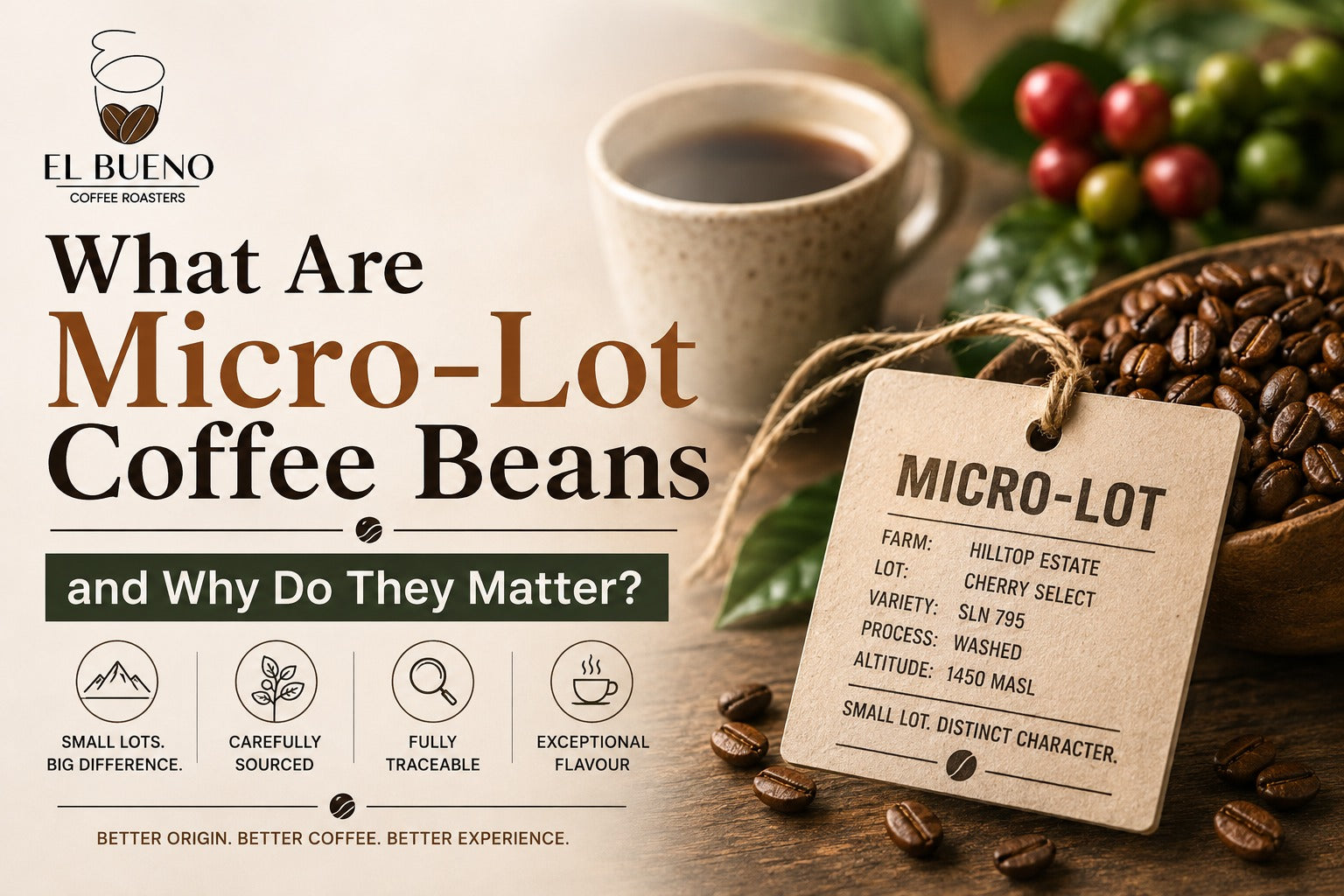
Coffee can come from an entire country, a region, a single farm or even a very small, carefully selected section of a farm. That last category is where micro-lot coffee beans stand out.
Micro-lot coffees are produced in limited quantities and are often selected for their distinctive flavour, traceability, and exceptional quality. For specialty coffee drinkers, they offer an opportunity to experience flavours that may not be found in conventional blends or larger commercial lots.
But what exactly makes a coffee a micro-lot, and why does it matter?
What Are Micro-Lot Coffee Beans?
Micro-lot coffee beans are small, highly traceable batches of coffee produced from a specific farm, plot, harvest, or processing lot. Because the quantity is limited and the coffee is kept separate from larger batches, its unique characteristics can be preserved and highlighted through careful roasting.
Unlike large commercial lots, which may combine beans from multiple farms or areas, micro-lots typically have a much more specific origin story.
A micro-lot may be identified by:
- A particular coffee estate
- A small section of a farm
- A specific altitude or growing area
- A particular coffee variety
- A distinct harvesting period
- A unique processing method
- A carefully separated harvest lot
This level of separation gives coffee professionals and consumers greater insight into where their coffee came from and why it tastes the way it does.
Why Are Micro-Lot Coffees Considered Specialty Coffee?
Micro-lot coffees are closely associated with specialty coffee because they focus on quality, traceability, and distinctive sensory characteristics.
Specialty coffee producers often pay close attention to factors such as:
- Coffee variety
- Growing altitude
- Soil and climate
- Harvest timing
- Selective picking
- Processing method
- Drying conditions
- Storage
- Roasting
When these variables are carefully managed, the resulting coffee can have a more defined and memorable flavour profile.
For example, one micro-lot might have notes of berries and chocolate, while another from a different estate could show citrus, florals, caramel, or spice.
How Is Micro-Lot Coffee Different From Regular Coffee?
The biggest difference is scale and traceability.
A conventional coffee blend may combine beans from different origins to create a consistent flavour and price point. Micro-lot coffee, on the other hand, is generally kept separate because its individual characteristics are considered worth preserving.
|
Micro-Lot Coffee |
Conventional Coffee |
|
Produced in limited quantities |
Often produced at larger scale |
|
Highly traceable |
May have broader origin information |
|
Usually associated with specialty coffee |
Can range from commercial to specialty |
|
Distinctive flavour profiles |
Often designed for consistency |
|
Specific farm or lot information |
May combine multiple origins |
|
Limited availability is common |
Usually easier to source year-round |
Neither approach is inherently better for every coffee drinker. Blends can provide consistency, while micro-lots are particularly appealing to people who want to explore unique origins and flavours.
Why Does Traceability Matter in Micro-Lot Coffee?
Traceability helps connect the coffee in your cup with its agricultural origin.
When a coffee can be traced back to a specific estate or production lot, roasters and consumers can better understand factors such as where the beans were grown, how they were processed, and what makes that particular coffee distinctive.
Traceability can also encourage greater appreciation for the work involved in producing specialty coffee.
For roasters, it provides an opportunity to tell the story behind the beans. For coffee drinkers, it turns a regular cup into a way of exploring different farms, regions, varieties, and processing techniques.
Do Micro-Lot Coffee Beans Taste Better?
Micro-lot coffee beans are not automatically better simply because they are micro-lots, but they can offer exceptional and distinctive flavour experiences.
The final quality depends on many factors, including cultivation, harvesting, processing, storage, roasting, and brewing.
One of the biggest advantages of micro-lot coffee is that its unique characteristics are less likely to be hidden within a large blended batch. A skilled roaster can develop a roast profile that brings out the qualities of that particular lot.
This may result in flavours that are:
- More clearly defined
- More complex
- More balanced
- More aromatic
- More distinctive from one origin to another
How Does Roasting Affect Micro-Lot Coffee?
Roasting plays a major role in determining how a micro-lot expresses itself in the cup.
A coffee with bright fruit and floral characteristics may benefit from a roast profile designed to preserve those delicate notes. Another lot with chocolate, caramel, or nutty characteristics may respond differently.
This is why specialty roasters often approach individual lots differently instead of applying exactly the same roast profile to every coffee.
The goal is to develop the coffee rather than simply roast it to a predetermined level.
At El Bueno Coffee Roasters, this approach is particularly relevant to coffees sourced from carefully selected estates and origins. Based in Delhi and serving cafés, restaurants, hotels, and home brewers across India, El Bueno works with specialty coffees and offers options including single-estate coffees, blends, and customised roast profiles.
What Is the Difference Between a Single-Estate Coffee and a Micro-Lot?
These terms are related, but they are not exactly the same.
A single-estate coffee comes from one identified coffee estate or farm.
A micro-lot refers more specifically to a small, separated production lot. It may come from a particular section of an estate, a specific variety, processing batch, or harvest.
Therefore, a single estate can produce several micro-lots.
For example, a coffee estate might produce:
- Lot A: Washed Arabica
- Lot B: Natural Arabica
- Lot C: A particular coffee variety from a higher-altitude section
All three could come from the same estate but have very different flavour characteristics.
Why Are Micro-Lot Coffees More Expensive?
Micro-lot coffee can cost more because producing and handling small, highly controlled lots requires additional attention and resources.
Several factors can contribute to the price:
- Selective harvesting – Ripe coffee cherries may be picked carefully to improve quality.
- Separate processing – Small lots may require individual processing and drying.
- Detailed quality control – Producers and buyers may evaluate each lot more closely.
- Limited supply – Exceptional micro-lots may be available in very small quantities.
- Specialised roasting – Roasters may develop individual profiles for different lots.
- Traceability – Detailed sourcing and quality information adds value throughout the supply chain.
The higher price is therefore not simply about the name "micro-lot." It can reflect the additional work involved from farm to final cup.
Are Micro-Lot Coffee Beans Worth Trying?
For coffee enthusiasts who enjoy exploring different flavours and origins, micro-lot coffee beans can definitely be worth trying.
They are particularly interesting if you:
- Want to discover coffees from specific Indian estates
- Enjoy trying different processing methods
- Prefer distinctive flavour profiles
- Like knowing where your coffee comes from
- Want to compare coffees from different origins
- Enjoy experimenting with brewing methods
Micro-lots can make coffee tasting more educational because small differences in origin, variety, processing, and roasting can become easier to notice.
How Should You Brew Micro-Lot Coffee?
There is no single brewing method that works for every micro-lot.
The best method depends on the coffee's roast profile, processing style, variety, and flavour characteristics.
For lighter specialty coffees, methods such as pour-over can highlight acidity, floral notes, and fruit characteristics. Espresso can provide a more concentrated expression, while French press or immersion brewing may produce a fuller-bodied cup.
If you're trying a new micro-lot, start with the roaster's recommended brewing recipe and adjust variables such as:
- Coffee-to-water ratio
- Water temperature
- Grind size
- Brewing time
- Pouring technique
Small adjustments can significantly change the flavours you experience.
Are Micro-Lot Coffees Available in India?
Yes. India produces a growing range of specialty coffees, including estate-specific and limited production lots.
Indian coffee-growing regions such as Karnataka, Kerala, Tamil Nadu, and Andhra Pradesh produce coffees with diverse flavour characteristics because of differences in elevation, climate, varieties, and processing practices.
Specialty coffee roasters help make these coffees more accessible by sourcing selected lots and developing roast profiles suited to their characteristics.
For businesses and consumers looking for specialty coffee in India, El Bueno Coffee Roasters offers premium roasted coffee sourced from Indian estates as well as selected international origins. Its range includes single-estate coffees, signature blends, and roast options suited to different brewing and business requirements.
How Can You Choose a Good Micro-Lot Coffee?
When buying a micro-lot, look beyond the label and check the information provided about the coffee.
A useful micro-lot description may include:
- Country and region
- Coffee estate or farm
- Coffee variety
- Processing method
- Elevation
- Harvest information
- Roast date
- Tasting notes
- Recommended brewing method
Freshness is also important. Coffee gradually loses some of its aromatic qualities after roasting, so buying freshly roasted beans and storing them correctly can make a noticeable difference.
Frequently Asked Questions About Micro-Lot Coffee
What does micro-lot mean in coffee?
Micro-lot refers to a small, separately identified batch of coffee that can often be traced to a specific farm, section of a farm, variety, harvest, or processing lot.
Is micro-lot coffee better than regular coffee?
Not necessarily. Micro-lot coffee is valued for its traceability and distinctive characteristics, but quality still depends on farming, processing, roasting, storage, and brewing.
Why is micro-lot coffee expensive?
Micro-lots can cost more because of selective harvesting, separate processing, quality control, limited production, detailed traceability, and specialised roasting.
What is the difference between micro-lot and single-estate coffee?
Single-estate coffee comes from one identified estate. A micro-lot is a smaller, separately managed lot and can represent a specific part, variety, process, or harvest from that estate.
Does micro-lot coffee taste different?
It can. Because micro-lots are kept separate, their individual characteristics can be preserved, allowing flavours associated with their origin, variety, processing, and roast profile to become more noticeable.
Are Indian coffee beans available as micro-lots?
Yes. Indian specialty coffee producers and roasters offer coffees from individual estates and limited production lots from different coffee-growing regions.
Final Thoughts
Micro-lot coffee represents a more detailed way of experiencing specialty coffee. Instead of treating coffee as a uniform commodity, it highlights the differences created by place, variety, processing, farming, harvesting, and roasting.
For coffee lovers, that means every micro-lot can offer something new to discover. For cafés, restaurants, hotels, and specialty coffee businesses, it can also provide an opportunity to offer customers distinctive coffees with a stronger sense of origin.
Whether you are exploring Indian coffee estates or discovering international origins, choosing freshly roasted micro-lot coffee from a specialist roaster can make the journey from farm to cup much more interesting.
El Bueno Coffee Roasters , based in Delhi, brings together specialty coffee sourcing and careful roasting for businesses and home brewers across India, with a focus on fresh beans, selected origins, estate coffees, blends, and roast profiles designed around different coffee preferences.


