


Cart
0
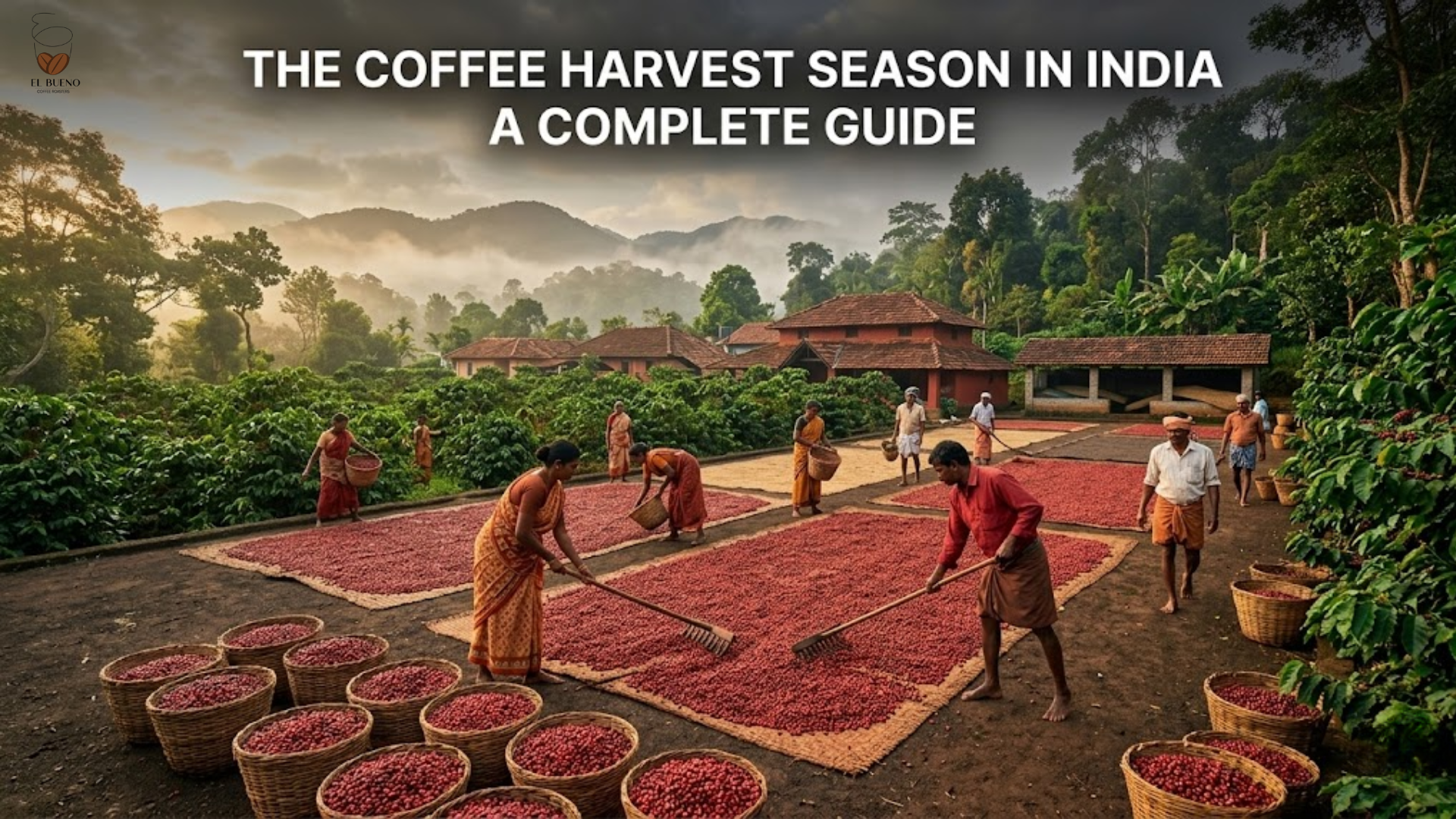
India is one of the world's important coffee-producing countries, known for its shade-grown coffee plantations, diverse growing regions, and distinctive Arabica and Robusta coffees. The coffee harvest season in India is an important period for farmers, coffee processors, and specialty coffee roasters because the timing and quality of harvesting can influence the characteristics of the coffee that eventually reaches your cup.
Coffee is primarily grown in India's southern states, including Karnataka, Kerala, and Tamil Nadu, along with emerging coffee-growing areas such as Araku Valley in Andhra Pradesh.
The main coffee harvest season in India generally runs from November to March, although the exact timing varies by region, coffee variety, weather conditions, and elevation. Arabica generally begins harvesting earlier, while Robusta harvesting tends to extend later into the season.
Understanding when coffee is harvested, how ripe cherries are selected, what happens after harvesting, and how beans are eventually roasted can help you better understand Indian specialty coffee.
When Is the Coffee Harvest Season in India?
The coffee harvest season in India generally takes place between November and March. However, the exact harvesting period varies depending on the coffee-growing region, elevation, variety, and seasonal weather conditions.
When Is Arabica Coffee Harvested in India?
Arabica coffee is generally harvested from around November through February, with harvesting often concentrated during December and January.
The exact timing can vary depending on the plantation and weather conditions. Arabica cherries are harvested when they reach the appropriate stage of ripeness, which is typically indicated by their mature color.
When Is Robusta Coffee Harvested in India?
Robusta coffee is generally harvested later than Arabica, with harvesting commonly extending from December into March.
Robusta is widely cultivated in regions such as Karnataka and Kerala and can have a longer harvesting window depending on local conditions.
Does Every Coffee Farm Harvest at the Same Time?
No. Coffee harvesting does not happen on exactly the same dates across India.
Harvest timing can change based on:
-
Coffee variety
-
Elevation
-
Rainfall
-
Temperature
-
Plantation location
-
Flowering period
-
Cherry ripening
-
Local weather conditions
This is why coffee from different Indian estates can reach processors and roasters at different times of the year.
Where Is Coffee Grown in India?
Before understanding the harvest season, it is useful to know where Indian coffee is produced.
What Are the Major Coffee-Growing Regions in India?
The major coffee-producing regions include:
-
Karnataka – India's largest coffee-producing state
-
Kerala – an important producer, particularly of Robusta
-
Tamil Nadu – known for high-elevation coffee-growing areas
-
Andhra Pradesh – particularly the Araku Valley region
-
Odisha – smaller-scale coffee production
Within these states, well-known coffee-growing areas include Coorg, Chikkamagaluru, Wayanad, the Nilgiris, and Araku Valley.
Many Indian coffee plantations are grown under shade, with trees helping create a suitable environment for coffee plants.
What Types of Coffee Are Harvested in India?
India primarily produces two commercially important coffee species:
Arabica
Arabica is known for its aromatic, nuanced, and often smoother flavor profile.
Depending on its origin and processing, Indian Arabica can offer characteristics such as:
-
Chocolate
-
Caramel
-
Nuts
-
Fruit
-
Citrus
-
Floral notes
Robusta
Robusta is known for its stronger body, higher caffeine content, and more intense flavor.
It can have characteristics such as:
-
Earthy notes
-
Woody flavors
-
Bitterness
-
Full body
-
Strong roasted character
Robusta is also commonly used in espresso blends because it can contribute body and crema.
Why Is the Coffee Harvest Season Important?
The harvest season is important because the quality of the coffee begins with the quality and maturity of the cherries being harvested.
Coffee cherries that are harvested at the appropriate stage of ripeness can provide better raw material for subsequent processing.
During harvest, farmers and workers focus on:
-
Identifying ripe cherries
-
Picking coffee at the appropriate maturity
-
Removing damaged or unsuitable cherries
-
Maintaining the quality of the crop
-
Moving harvested cherries for processing
However, harvest quality is only the beginning. Processing, drying, storage, roasting, grinding, and brewing also influence the final coffee experience.
How Is Coffee Harvested in India?
Coffee in India is commonly harvested by hand, particularly on plantations where selective picking is used to collect ripe cherries.
Hand harvesting requires more labor but allows workers to select cherries based on their maturity.
Step 1: Checking Coffee Cherry Ripeness
Farm workers assess the cherries to determine whether they are ready to harvest.
Mature cherries generally develop a characteristic ripe color, although the exact appearance can vary by variety.
Step 2: Picking the Coffee Cherries
Workers pick suitable cherries from the coffee plants.
Depending on the plantation and harvesting approach, cherries may be selectively picked or collected using other manual methods.
Step 3: Sorting the Harvest
After collection, cherries can be sorted to remove:
-
Unripe cherries
-
Overripe cherries
-
Damaged cherries
-
Foreign material
This helps prepare the crop for the next stage of processing.
What Happens to Coffee After Harvesting?
Coffee cherries must be processed after harvesting to remove the fruit surrounding the coffee seed.
The exact process depends on the processing method used by the producer.
Common coffee processing approaches include washed, natural, and honey-style processing, with each method capable of influencing the coffee's final characteristics.
1. Pulping
In washed or certain other processing methods, the outer skin and fruit are mechanically removed from the coffee cherry.
2. Fermentation
Some coffees undergo fermentation to help remove remaining mucilage from the coffee seed.
The duration and conditions of fermentation can vary depending on the processing method.
3. Washing
For washed coffees, the beans are cleaned to remove remaining material before drying.
4. Drying
Coffee is dried until it reaches an appropriate moisture level for storage.
Drying may take place on patios, raised beds, or through mechanical drying systems, depending on the farm and processing facility.
5. Hulling
Once the coffee has been sufficiently dried, the outer parchment layer can be removed.
6. Grading and Sorting
The processed coffee is sorted and graded according to characteristics such as size, density, defects, and quality.
At this point, the coffee is generally referred to as green coffee and can be stored, transported, and eventually roasted.
How Does Coffee Processing Affect Flavor?
Coffee processing can have a significant influence on the flavor characteristics of the final cup.
For example:
Washed coffee: Often associated with cleaner and brighter flavor characteristics.
Natural coffee: Can develop pronounced fruitiness and sweetness because the coffee dries with much of the fruit surrounding the seed.
Honey or pulped-natural coffee: Can offer characteristics between washed and natural processing depending on how it is produced.
The final flavor is also influenced by coffee variety, growing conditions, fermentation, drying, roasting, and brewing.
Why Does the Coffee Harvest Matter to Specialty Coffee?
Specialty coffee places considerable importance on traceability, quality, processing, and consistency.
During harvest, specialty coffee producers may pay close attention to:
-
Cherry maturity
-
Selective picking
-
Processing methods
-
Drying conditions
-
Lot separation
-
Traceability
-
Quality control
This information can eventually help roasters understand the characteristics of a particular coffee and develop an appropriate roasting profile.
How Does El Bueno Coffee Roasters Approach Indian Coffee?
At El Bueno Coffee Roasters, the focus is on sourcing quality coffee and using small-batch roasting to highlight the natural characteristics of the beans.
The brand works with Indian coffee producers and focuses on bringing out the individual qualities of different coffees through careful roasting.
For coffee enthusiasts, this approach provides an opportunity to explore coffees based on:
-
Origin
-
Flavor profile
-
Roast level
-
Processing method
-
Brewing method
El Bueno also supports home brewers, cafés, restaurants, offices, and other businesses with coffee equipment, brewing solutions, and beverage development.
Why Does Small-Batch Roasting Matter After Harvest?
Harvesting and processing determine the condition of the green coffee, but roasting transforms those green beans into the aromatic coffee that consumers brew and drink.
Small-batch roasting can allow roasters to pay close attention to:
-
Batch consistency
-
Roast development
-
Aroma
-
Flavor
-
Body
-
Acidity
A suitable roast profile can help highlight the characteristics that make a particular coffee unique.
For specialty coffee, the goal is not simply to roast beans until they are dark. The roasting process is carefully controlled to develop the desired flavor characteristics.
Does Fresh Harvest Coffee Always Taste Better?
Not necessarily. Freshly harvested green coffee is not the same as freshly roasted coffee.
After harvesting, coffee needs to be processed, dried, stored, transported, and roasted before it becomes the coffee you brew.
For consumers, roast freshness is usually a more relevant factor than simply knowing the harvest date.
A high-quality coffee that has been properly processed, stored, and freshly roasted can provide an excellent cup even when the harvest occurred months earlier.
How Can You Buy Fresh Coffee During and After Harvest Season?
If you want to experience fresh Indian specialty coffee, don't look only for the harvest season.
Instead, check:
-
Roast date
-
Coffee origin
-
Processing method
-
Bean variety
-
Roast level
-
Tasting notes
-
Recommended brewing method
Buying whole beans and grinding them shortly before brewing can also help preserve aroma and flavor.
What Is the Difference Between Harvest Date and Roast Date?
This is an important distinction for coffee buyers.
Harvest date refers to when the coffee cherries were picked from the coffee plant.
Roast date refers to when the processed green coffee was roasted.
These dates can be separated by several months because harvested coffee needs to go through processing, drying, storage, transportation, and quality evaluation before roasting.
Therefore, checking the roast date is generally more useful for consumers who want freshly roasted coffee.
Coffee Harvest Season and Specialty Coffee in India
The growth of specialty coffee in India has made consumers more interested in the journey of coffee from farm to cup.
Coffee enthusiasts increasingly want to know:
-
Where was the coffee grown?
-
Which variety was used?
-
When was it harvested?
-
How was it processed?
-
How was it roasted?
-
What flavors should I expect?
-
Which brewing method should I use?
This increased interest in traceability has encouraged coffee roasters to provide more information about individual coffees.
For brands such as El Bueno Coffee Roasters, the connection between sourcing, roasting, and brewing is an important part of creating a better coffee experience.
Frequently Asked Questions About Coffee Harvest Season in India
When Is Coffee Harvested in India?
Coffee is generally harvested in India between November and March. Arabica harvesting commonly begins earlier, while Robusta harvesting can extend later into the season. Exact dates vary according to region, weather, elevation, and coffee variety.
When Is Arabica Coffee Harvested in India?
Arabica coffee is generally harvested from November to February, with the peak period often occurring around December and January. The exact harvesting period varies between plantations.
When Is Robusta Coffee Harvested in India?
Robusta coffee is generally harvested from December through March. The timing can vary depending on location, weather, and plantation conditions.
Which State Produces the Most Coffee in India?
Karnataka is India's largest coffee-producing state. Important coffee-growing areas in Karnataka include Chikkamagaluru and Coorg.
Which Indian States Grow Coffee?
Coffee is primarily grown in Karnataka, Kerala, and Tamil Nadu, with production also taking place in Andhra Pradesh and Odisha. Araku Valley in Andhra Pradesh is particularly known for its coffee-growing region.
Is Indian Coffee Harvested by Hand?
Much of India's coffee is harvested manually. Hand harvesting allows workers to selectively pick suitable coffee cherries and is particularly useful where selective harvesting is practiced.
What Happens After Coffee Is Harvested?
After harvesting, coffee cherries are processed, dried, hulled, graded, and stored as green coffee before being roasted. The exact processing steps depend on whether the coffee uses washed, natural, honey, or another processing method.
What Is the Best Time to Buy Freshly Roasted Indian Coffee?
The best time to buy freshly roasted coffee is based more on the roast date than the harvest date. Look for recently roasted beans from a quality-focused roaster and store them properly after purchase.
Does Coffee Harvest Season Affect Coffee Flavor?
Harvest quality can influence coffee flavor, but it is not the only factor. Variety, growing region, processing, drying, storage, roasting, grinding, and brewing all contribute to the final taste.
Why Is Indian Coffee Popular in Specialty Coffee?
Indian coffee is valued for its diverse growing regions, Arabica and Robusta production, shade-grown cultivation, and range of processing and flavor characteristics. These factors give specialty coffee roasters a diverse selection of coffees to work with.
Final Thoughts
The coffee harvest season in India generally runs from November to March, although the exact timing differs depending on the region, coffee variety, weather, and plantation.
From Arabica and Robusta grown in Karnataka, Kerala, and Tamil Nadu to emerging specialty coffee from regions such as Araku Valley, India's coffee industry offers considerable diversity.
The journey does not end when coffee cherries are picked. Harvesting, processing, drying, storage, roasting, grinding, and brewing all contribute to the final cup.
For coffee lovers, understanding this journey makes it easier to appreciate the work that goes into every batch. And when freshly roasted beans are sourced carefully and roasted with attention, the characteristics of Indian coffee can truly shine.
At El Bueno Coffee Roasters, the focus is on bringing that farm-to-cup journey closer to coffee lovers through carefully sourced coffees, small-batch roasting, and coffee solutions for both home brewers and businesses.
Great coffee starts at the farm, but every stage after harvest helps shape what finally reaches your cup.


