


Cart
0
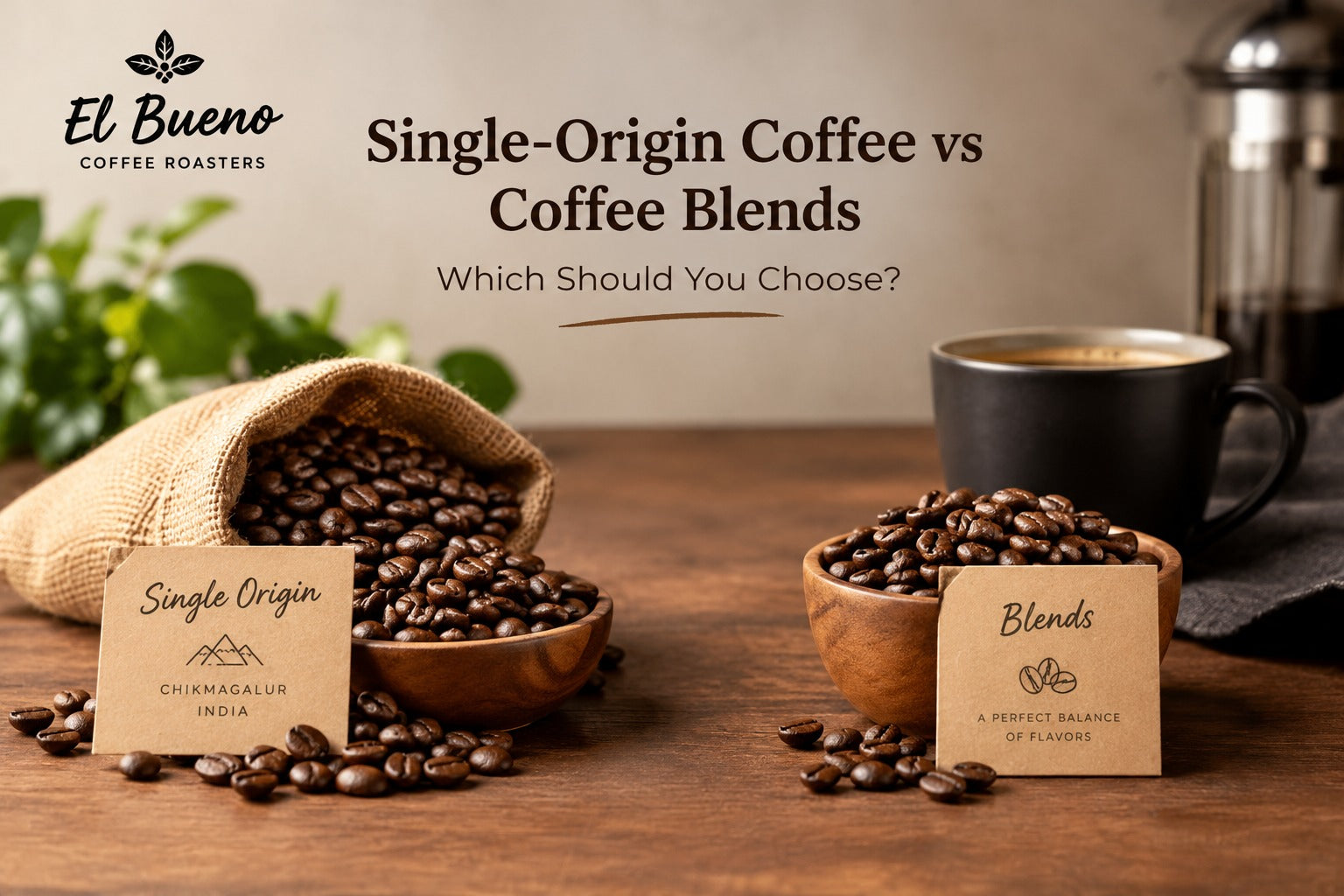
Choosing the right coffee can transform your daily brewing experience. Some coffee lovers enjoy exploring the distinctive flavors of coffee from a specific region, while others prefer a balanced cup with consistent taste. This is where the difference between single-origin coffee and coffee blends becomes important.
At El Bueno Coffee Roasters, understanding coffee origins, flavor profiles, and roasting styles can help you choose beans that match your preferences. Whether you brew coffee at home or enjoy café-style drinks, both options offer something worth exploring.
What Is Single-Origin Coffee?
Single-origin coffee comes from a specific geographical origin, such as a country, region, farm, or cooperative, depending on how the coffee is sourced and labelled. Its flavor reflects factors such as the coffee variety, growing conditions, processing method, and roasting profile.
For example, coffee from Chikmagalur or Coorg in Karnataka can offer different flavor characteristics depending on the beans and how they are processed. Some coffees feature chocolatey or nutty notes, while others may have fruity, floral, or spicy characteristics.
Choose single-origin coffee if you enjoy exploring regional differences, tasting distinctive flavors, and learning about where your coffee comes from.
What Is a Coffee Blend?
A coffee blend combines beans from two or more origins, varieties, or lots. Roasters create blends to achieve a particular flavor profile, balance, or brewing performance.
A blend might combine beans that contribute sweetness, body, aroma, or acidity. For instance, one coffee may provide chocolatey notes, while another adds brightness or a fuller mouthfeel. The result depends on the beans selected and the roaster's approach.
Blends are popular for espresso and milk-based beverages because they can be designed to deliver a balanced flavor in cappuccinos, lattes, and other coffee drinks.
Choose a coffee blend if you prefer a familiar flavor profile, consistency, or coffee that works well with your usual brewing method.
Single-Origin Coffee vs Coffee Blends: Key Differences
|
Feature |
Single-origin coffee |
Coffee blends |
|
Source |
A defined geographical origin |
Two or more origins, varieties, or lots |
|
Flavor |
Highlights the characteristics of its source |
Designed for balance and a particular taste |
|
Variety |
Useful for exploring regional differences |
Offers a combined flavor profile |
|
Consistency |
Can vary between harvests and lots |
Often formulated for a more consistent profile |
|
Popular uses |
Pour-over, filter coffee, black coffee |
Espresso, cappuccino, latte, and everyday brewing |
Neither option is automatically better. Quality depends on the beans, processing, roasting, storage, and brewing technique.
Which Is Better for Black Coffee?
If you enjoy black coffee, single-origin beans can be a great way to explore subtle differences in sweetness, acidity, aroma, and body. Pour-over and filter brewing can help highlight these characteristics.
However, blends can also make excellent black coffee. A well-developed blend may offer a balanced cup with chocolate, caramel, or nutty notes.
If you're new to specialty coffee, try a medium roast with a balanced flavor profile. Then compare a single-origin coffee and a blend using the same brewing method to discover which you prefer.
Which Is Better for Espresso and Milk-Based Drinks?
Coffee blends are often chosen for espresso because roasters can combine beans to create a specific balance of flavor, body, and sweetness. This can help the coffee maintain its character when combined with milk.
Single-origin coffee can also work beautifully as espresso. Depending on its profile, it may offer fruity, floral, chocolatey, or other distinctive notes.
For cappuccinos and lattes, consider whether you prefer a bold, chocolate-forward taste or a more expressive coffee flavor. Your personal preference matters more than a strict rule about which type is best.
How to Choose the Right Coffee in India
Indian coffee drinkers can explore both single-origin coffees and blends. Regions such as Chikmagalur and Coorg in Karnataka are known for coffee cultivation, with additional growing areas across Kerala and Tamil Nadu.
Use these simple guidelines when selecting coffee:
-
For exploring regional flavors: Try a single-origin coffee with clear origin information and tasting notes.
-
For everyday consistency: Consider a blend designed for your preferred brewing style.
-
For espresso and milk drinks: Explore blends with chocolatey, nutty, or caramel notes.
-
For filter coffee and pour-over: Compare single-origin coffees with different roast levels.
-
For beginners: Start with a balanced medium roast and adjust as you discover your preferences.
Check the packaging for roast date, origin details, tasting notes, and recommended brewing methods to make a more informed choice.
Discover Coffee with El Bueno Coffee Roasters
The best coffee is the one that suits your taste and brewing routine. Single-origin coffee lets you explore the characteristics of a particular source, while blends bring different beans together to create a desired flavor profile.
At El Bueno Coffee Roasters, exploring coffee is an opportunity to discover new aromas, flavors, and brewing experiences. Try different profiles, compare how they taste in your favorite brewing method, and find the coffee you enjoy most.
Ready to explore your next cup? Discover El Bueno Coffee Roasters and choose coffee that fits your taste preferences.
Frequently Asked Questions
1. What is the main difference between single-origin coffee and a blend?
Single-origin coffee comes from a defined geographical source, while a blend combines beans from two or more origins, varieties, or lots to achieve a particular flavor profile.
2. Is single-origin coffee better than a blend?
Not necessarily. Single-origin coffee is ideal for exploring distinctive regional characteristics, while blends can offer balance and consistency. The better choice depends on your taste and brewing method.
3. Is single-origin coffee good for espresso?
Yes. Single-origin coffee can make excellent espresso when the roast and brewing recipe suit the beans. Blends are also popular for espresso because they can be designed for a particular balance of flavor and body.
4. Which coffee is best for beginners?
A balanced medium-roast coffee is a useful starting point. You can try both a single-origin coffee and a blend to compare their flavors and discover your preference.
5. Can Indian coffee be single-origin?
Yes. Coffee sourced from a defined Indian region, farm, or cooperative can be sold as single-origin coffee when the sourcing information supports that description. Karnataka, Kerala, and Tamil Nadu are among India's coffee-growing states.
Conclusion
Single-origin coffee and coffee blends offer different ways to enjoy quality coffee. Single-origin options help you explore the distinctive characteristics of a particular source, while blends combine beans to create a specific taste and balance. Consider your preferred flavor, roast level, and brewing method when choosing between them. With El Bueno Coffee Roasters, you can explore different coffee profiles and make your daily coffee experience more personal.


