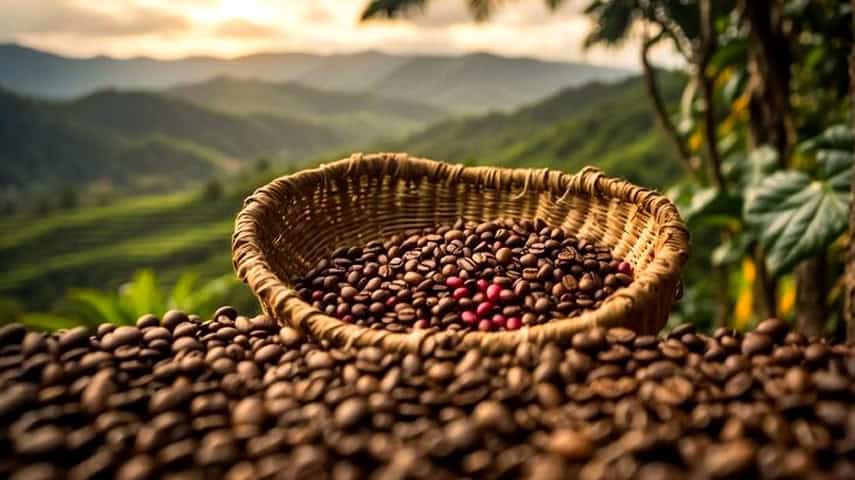
Before coffee develops its aroma, body, and flavor in the roaster, it exists in its purest form as green coffee beans. Raw, unroasted, and surprisingly complex, these beans carry the entire potential of what eventually ends up in your cup.
Most people assume roasting creates flavor. In reality, roasting only reveals what already exists inside the green coffee bean. The quality of coffee is largely decided long before heat ever touches it.
Understanding green coffee is therefore the first step toward understanding great coffee itself.
What Are Green Coffee Beans?
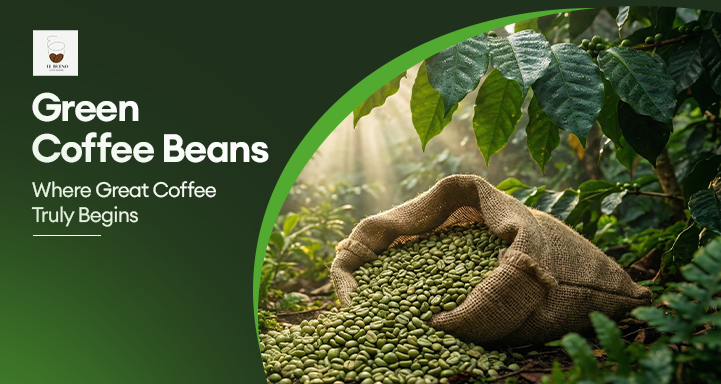
Green coffee beans are coffee seeds that have been harvested, processed, and carefully dried but not yet roasted. At this stage, they appear pale green in color, feel dense to the touch, and carry a fresh, grassy aroma rather than the familiar smell of coffee.
While they may seem unfinished, green beans are where origin, farming practices, and processing methods define the future flavor of the coffee.
Altitude, soil composition, rainfall, varietal, and post-harvest processing all leave lasting fingerprints on the bean long before roasting begins.
Why Green Coffee Bean Quality Matters So Much
A skilled roaster can enhance coffee, but cannot completely fix poor raw material. Exceptional coffee always starts with exceptional green beans.
Here’s what truly matters at the green stage:
Origin and terroir
Flavor notes such as chocolate, citrus, spice, or florals are shaped at the farm level.
Processing method
Washed, natural, and honey-processed coffees develop dramatically different flavor structures.
Crop freshness
Green coffee changes over time. Fresh crop beans offer vibrancy and clarity, while older coffees tend to lose complexity.
Storage conditions
Temperature, humidity, and packaging determine whether beans retain stability before roasting.
For specialty coffee roasters, evaluating green coffee is both science and experience. This is where El Bueno Coffee Roasters stands apart by treating green coffee beans not as a commodity, but as the foundation of exceptional coffee.
What Specialty Coffee Roasters Actually Look for in Green Coffee
Before roasting begins, specialty coffee roasters assess green beans carefully. Some of the key indicators include:
Moisture content and water activity
Bean density and hardness
Screen size consistency
Visible defect count
Processing uniformity
Harvest season freshness
These factors help determine specialty coffee roasters how heat should be applied during roasting and how the final flavor will develop.
Every green coffee behaves differently inside the roaster, which is why roasting profiles are never truly one-size-fits-all.
From Farm to Roastery: The Journey of a Green Bean
Green coffee carries the work of farmers, processors, exporters, and importers long before it reaches a specialty coffee roastery.
Indian coffees, particularly those grown in Karnataka and Tamil Nadu, often present unique density and spice-forward characteristics that influence roasting decisions.
At El Bueno Coffee Roasters, sourcing begins with close relationships with Indian coffee producers across growing regions known for quality-focused cultivation. Working closely with origin allows better traceability, consistency, and transparency throughout the supply chain.
Respecting the bean at its green stage ensures that roasting highlights natural character rather than masking it.
Green Coffee Beans vs Roasted Coffee Beans
Green Coffee Beans
Roasted Coffee Beans
Raw and unroasted
Heat-developed
Mild, grassy aroma
Rich coffee aroma
Stable shelf life
Best consumed fresh
Flavor potential intact
Flavor fully expressed
Roasting transforms structure, chemistry, and aroma but the foundation always comes from the green bean itself.
Common Misconceptions About Green Coffee
Myth: Dark roasting determines coffee strength
Strength is influenced more by origin and brewing ratio than roast level.
Myth: All green beans are similar before roasting
Even visually similar beans can behave completely differently during roasting.
Myth: Older green coffee improves with age
Unlike wine, most specialty coffee performs best within a defined freshness window.
The Role of Roasting: Unlocking What’s Already There
Roasting is where technical precision meets sensory judgment. Heat application must align with the bean’s density, moisture, and origin characteristics.
At El Bueno Coffee Roasters, small-batch roasting allows careful control over development time and temperature progression, ensuring the coffee’s inherent qualities remain intact rather than overshadowed.
The goal is not to impose flavor, but to reveal it.
Beyond Roasting: Are Green Coffee Beans Used Elsewhere?
Green coffee beans are sometimes used in extracts and supplements due to naturally occurring compounds such as chlorogenic acids. However, within specialty coffee, their greatest value lies in their transformation through thoughtful roasting and brewing.
How El Bueno Coffee Roasters Brings Green Beans to Life
Great coffee doesn’t happen by accident. It’s the result of thoughtful sourcing, slow roasting, and deep respect for the bean.
El Bueno Coffee Roasters focuses on:
Small-batch roasting for precision and consistency
Highlighting the bean’s natural flavor instead of masking it
Supporting Indian farmers and sustainable practices
Offering complete coffee solutions from beans to brewing equipment
Whether you’re a home brewer, café owner, or coffee explorer, their approach ensures that every cup begins with only good green coffee beans and ends with an unforgettable experience.
Final Sip: Why Green Coffee Beans Deserve More Attention
Green coffee beans may never be seen by most coffee drinkers, yet they determine nearly everything about the final cup from sweetness and acidity to balance and aroma.
Every memorable coffee begins long before brewing. It starts at origin, continues through careful sourcing, and culminates in roasting decisions shaped around the bean itself.The next time you enjoy a well-balanced cup, remember that its story began long before roasting while the coffee was still green. Great coffee doesn’t begin in the cup. It begins while the bean is still green.


 18Jul
18Jul